
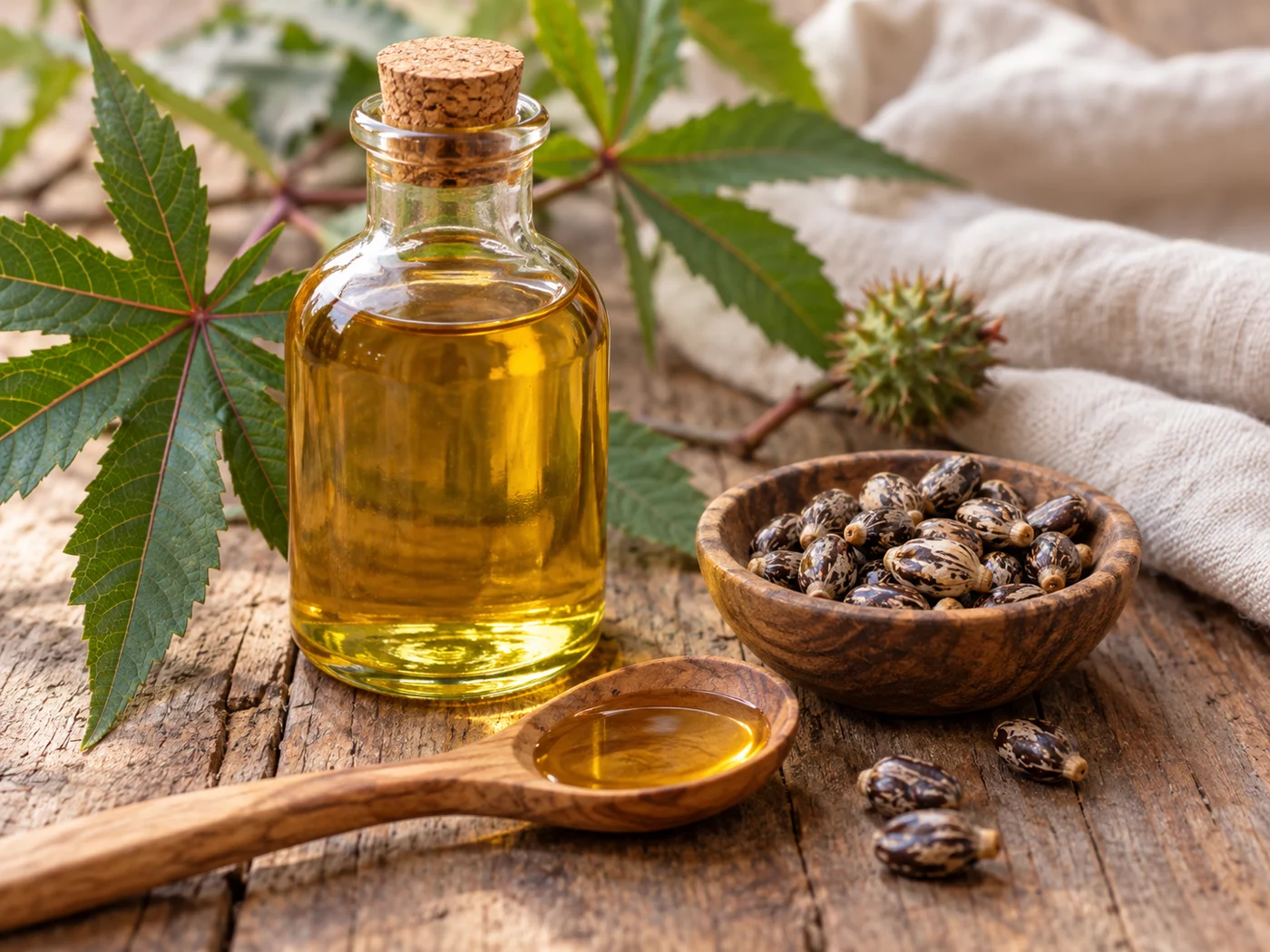
Castor oil is one of those wellness products that somehow feels both very old-fashioned and very trendy at the same time. You may remember it as something older generations kept in the medicine cabinet, but now it is showing up in skincare routines, hair products, castor oil packs, abdominal wraps, massage oils, and practically every corner of social media.
Depending on where you look, you may also see some enormous claims attached to it.
Castor oil packs are promoted for “liver detox,” lymphatic drainage, hormone balance, digestion, inflammation, fertility, and dozens of other concerns. That does not mean there is nothing interesting about castor oil. It means this is another ingredient where I think we benefit from separating what we know, what has been studied, and what remains mostly traditional use or wellness marketing.
Castor oil has been used for thousands of years, but something being old does not automatically make every modern claim about it true. Fortunately, the oil itself is interesting enough without needing to promise everything.
What Exactly Is Castor Oil?
Castor oil is pressed from the seeds of Ricinus communis, the castor plant. Its fatty-acid composition is unusual because it contains a particularly high proportion of ricinoleic acid, a hydroxylated fatty acid responsible for many of castor oil’s distinctive properties.
Ricinoleic acid is one reason castor oil feels different from many other plant oils. It is thick, viscous, and useful in everything from cosmetics and pharmaceuticals to industrial products. It is also responsible for castor oil’s best-established medicinal action when the oil is swallowed: its stimulant laxative effect. PubMed
Castor oil also contains smaller amounts of other fatty acids, but ricinoleic acid is the compound researchers return to again and again when trying to understand what makes this oil biologically interesting.
Castor Oil Actually Does Have a Proven Biological Effect
One thing I appreciate about researching traditional wellness ingredients is discovering where folklore and modern physiology actually intersect.
When castor oil is taken orally, digestive enzymes break it down and release ricinoleic acid. Research has shown that ricinoleic acid activates a receptor called the EP3 prostanoid receptor on intestinal smooth muscle. That stimulates intestinal contractions and explains castor oil’s long-recognized laxative action. The same receptor pathway also helps explain why castor oil can stimulate uterine contractions. PubMed
So castor oil is not biologically inactive simply because it is “natural.” It has real pharmacological effects.
That is also exactly why swallowing it casually is very different from rubbing a little on the skin.
Oral Castor Oil and Topical Castor Oil Are Not the Same Thing
This distinction gets blurred surprisingly often online.
Oral castor oil is classified as a stimulant laxative. It can increase intestinal motility and may produce cramping, diarrhea, nausea, and urgency. Its ability to stimulate uterine smooth muscle is also why pregnancy deserves particular caution. Modern medical references generally have other laxative options available that are easier to tolerate for routine constipation. NCBI
Topical castor oil is another story. When someone rubs castor oil into dry skin or places a castor oil pack over the abdomen, they are not taking the same dose through the same route, and we cannot simply take research on oral castor oil and assume the same effects occur through the skin.
That sounds obvious when we say it out loud, but it is an important distinction when reading wellness claims.
Why Castor Oil Shows Up in Skincare
Castor oil has a much more established history in cosmetics than many people realize. It is used as a skin-conditioning ingredient, emollient, surfactant component, and carrier within different topical formulations. A 2026 dermatology review examined its uses in skin and hair care and found evidence suggesting benefits related to moisturization, skin conditioning, cleansing formulations, and some other dermatologic applications, while also emphasizing that stronger clinical research is still needed for many of the claims surrounding it. PubMed
Its thick texture means some people enjoy it by itself while others prefer it blended with lighter oils. Like essentially any topical ingredient, it can also irritate some people. Contact dermatitis has been reported, so “natural” does not mean everyone’s skin will automatically love it. PubMed
If someone has sensitive skin, trying a small amount on a limited area before coating a large portion of the body makes much more sense than assuming plant-based equals reaction-proof.
What About Castor Oil for Hair?
Hair is another area where castor oil has become extremely popular.
There is some support for castor oil as a hair-conditioning oil, particularly for improving shine or luster and coating the hair shaft. A recent dermatology review also discussed potential mechanisms that have created interest in castor oil for hair loss, but the clinical evidence is nowhere near strong enough to promise that applying castor oil will regrow thinning hair. PubMed
That is an important distinction because social media often turns “good hair oil” into “hair-growth treatment.”
Those are not the same claim.
Someone may genuinely enjoy castor oil as part of a scalp or hair routine without needing to believe it will reverse the cause of hair loss. Hair loss can have many different causes, and a persistent or significant change deserves proper evaluation rather than relying on one oil.
And Then There Are Castor Oil Packs
This is probably the area where castor oil becomes most closely associated with holistic wellness.
A castor oil pack traditionally involves soaking a piece of cloth or flannel with castor oil, placing it over an area of the body—often the abdomen—and sometimes applying gentle warmth over it for a period of time.
People use packs for many different reasons. Some find the warmth and routine relaxing. Others use them as part of digestive or menstrual comfort practices. They are also heavily promoted for “supporting the liver,” improving lymphatic drainage, reducing inflammation, balancing hormones, or assisting detoxification.
This is where the research becomes much thinner.
There is not strong clinical evidence showing that topical castor oil packs detoxify the liver, remove toxins from the body, balance hormones, or increase lymphatic drainage. Those claims go considerably beyond what has actually been demonstrated in controlled human studies.
That does not mean someone cannot enjoy using a castor oil pack. It simply means we should describe the experience honestly.
What Has Actually Been Studied About Castor Oil Packs?
One small clinical study published in 2011 examined castor oil packs in older adults with chronic constipation. Participants used the packs for three days. Researchers did not find an increase in the number of bowel movements or the amount of stool produced, although participants did report improvements in some constipation symptoms such as straining and the feeling of incomplete evacuation. PubMed
That is interesting, but it is also very limited evidence. One study in a specific population does not establish castor oil packs as a treatment for constipation, and it certainly does not establish all of the other claims that have since become attached to them.
It is a great example of how wellness claims sometimes grow much faster than the evidence beneath them.
A study finds one potentially interesting effect, traditional use adds another layer, personal experiences add another, and eventually the internet is saying a castor oil pack “detoxes your liver.”
Those are very different levels of evidence.
What About the Famous “Liver Pack”?
If you have searched for castor oil packs online, you have almost certainly encountered instructions to place one over the upper right abdomen, often described as a liver pack.
I understand why the practice appeals to people. It creates a quiet ritual, usually involves warmth, requires someone to lie down for a while, and gives us something tangible to do when we are thinking about wellness.
What we do not currently have is good clinical evidence that placing castor oil over the abdomen improves liver detoxification or pulls toxins through the skin.
The liver already performs extraordinarily complex metabolic and detoxification functions. Supporting liver health generally looks much more ordinary: avoiding excessive alcohol, maintaining overall metabolic health, using medications and supplements appropriately, eating adequately, and addressing actual liver disease when it exists.
A castor oil pack can still be something someone enjoys.
It simply does not need to become a claim that we cannot substantiate.
Could Some of the Benefit Simply Be the Ritual?
I think wellness sometimes undervalues this possibility because it sounds less exciting.
Picture what usually happens during a castor oil pack: you stop what you are doing, lie down, put away some of the distractions, apply warmth, and spend twenty or thirty minutes being still.
Maybe that feels good because of the castor oil.
Maybe the warmth contributes.
Maybe slowing down contributes too.
The experience does not become meaningless just because we cannot attribute every relaxing feeling to a biochemical detox pathway. Sometimes a supportive ritual is allowed to be a supportive ritual.
Ricinoleic Acid and Inflammation
You will frequently see castor oil described as “anti-inflammatory,” and there is some biological research behind the interest in ricinoleic acid.
Laboratory and animal studies have investigated its effects on inflammatory pathways and pain responses. Researchers are also continuing to explore castor oil and related compounds in dermatology and topical formulations. However, preclinical activity does not automatically establish that putting castor oil on the abdomen treats inflammatory conditions throughout the body. PubMed
That distinction is one we keep coming back to in Ingredient Spotlights because it applies to so many wellness products.
A mechanism can be interesting.
A mechanism is not automatically a clinical outcome.
Does Castor Oil Contain Ricin?
This question understandably comes up because the castor plant is also the source of ricin, a highly toxic protein.
The dangerous ricin protein is found in the seed material, but properly manufactured castor oil does not contain meaningful ricin because the protein does not partition into the extracted oil and commercial processing removes seed solids. That is why pharmaceutical and cosmetic castor oil can be used safely even though raw castor beans themselves should absolutely not be eaten.
This is also a good reason to purchase commercially produced castor oil rather than attempting some homemade seed extraction experiment. Castor beans are not a DIY wellness ingredient.
What I Look for in Castor Oil
Castor oil itself is wonderfully simple, so I do not think buying it needs to become complicated.
For topical use, I prefer a product where castor oil is actually the ingredient, rather than one diluted with a long list of unnecessary additions. I also look at the packaging, sourcing information, processing method, and whether the company provides useful quality information rather than relying entirely on buzzwords.
Cold-pressed products are commonly chosen by people who want an oil extracted without high processing temperatures, although “cold pressed” by itself does not guarantee purity or effectiveness. Packaging in dark or opaque containers can also help protect oils from light exposure during storage.
And just as we have discussed with other wellness products, the biggest benefit claim printed on the front is rarely the first thing I want to know.
I want to know what is actually inside.
Where Castor Oil Fits for Me
I think castor oil is a great example of something that can fit into wellness without having to become a miracle treatment.
It can be used as a topical oil. It can be part of skin or hair care. Someone may enjoy a warm castor oil pack as part of a relaxing evening routine. There is legitimate pharmacology behind oral castor oil’s laxative action, although that also comes with real precautions and is not the same as topical use.
What I would not do is promise that castor oil is detoxifying organs, balancing hormones, curing digestive problems, draining the lymphatic system, or treating disease.
We can enjoy traditional practices while being honest about where the evidence stops.
I actually think that makes them more interesting.
The Castor Oil I Recommend
I do include a castor oil option on my Products I Recommend page for anyone interested in incorporating it into a topical wellness routine.
The point is not that everyone needs castor oil. It is simply one of those versatile, old-school products I think is worth understanding if it is something you are already curious about.
And if you decide it belongs in your cabinet, I would rather you understand what it realistically may—and may not—do before you buy it.
Observe
If castor oil is already sitting somewhere in your house, look at how you are actually using it.
Is it part of your skincare routine? Are you using it on your hair? Are you doing castor oil packs because you find the ritual relaxing? Or did you buy it because someone told you that you needed it to detox your liver or fix your hormones?
There is nothing wrong with enjoying a traditional wellness practice.
But knowing why we are doing something matters.
Castor oil has survived thousands of years of use because it is an unusual and genuinely interesting plant oil with real biological properties. We just do not have to attach every modern wellness claim to it to make it valuable.
Sometimes an old remedy can stay simple.
A Note About Castor Oil
This article is for general wellness education and is not medical advice. Topical castor oil may cause irritation or allergic contact dermatitis in some people. Oral castor oil acts as a stimulant laxative and can cause cramping, diarrhea, nausea, and other adverse effects. Because ricinoleic acid can stimulate uterine contractions, oral castor oil should not be used during pregnancy except under appropriate medical guidance. Persistent constipation, abdominal pain, significant hair loss, skin concerns, or other ongoing symptoms should be appropriately evaluated.
References
Tunaru S, et al. Castor oil induces laxation and uterus contraction via ricinoleic acid activating prostaglandin EP3 receptors. Proceedings of the National Academy of Sciences. 2012. This research identified the receptor mechanism responsible for castor oil’s stimulant effect on intestinal and uterine smooth muscle. PubMed
Castor Oil. StatPearls / National Library of Medicine. Reviews castor oil’s pharmacology, stimulant-laxative mechanism, dosing considerations, adverse effects, and clinical use. NCBI
Girdler K, Cabatu A, Olds H, Potts GA. Use of Castor Oil in Dermatology: A Narrative Review. 2026. Reviews current evidence involving castor oil in skin and hair care and notes both potential dermatologic applications and adverse reactions such as contact dermatitis. PubMed
Arslan GG, Eşer I. An examination of the effect of castor oil packs on constipation in the elderly. Complementary Therapies in Clinical Practice. 2011;17(1):58–62. A small human study found improvement in some constipation symptoms but no increase in bowel-movement frequency or stool amount. PubMed
Fiume MM, et al. Re-Review Summary of Ricinus Communis (Castor) Seed Oil and Ricinoleates as Used in Cosmetics. International Journal of Toxicology. 2025. Reviews the safety and cosmetic uses of castor oil and ricinoleate ingredients.